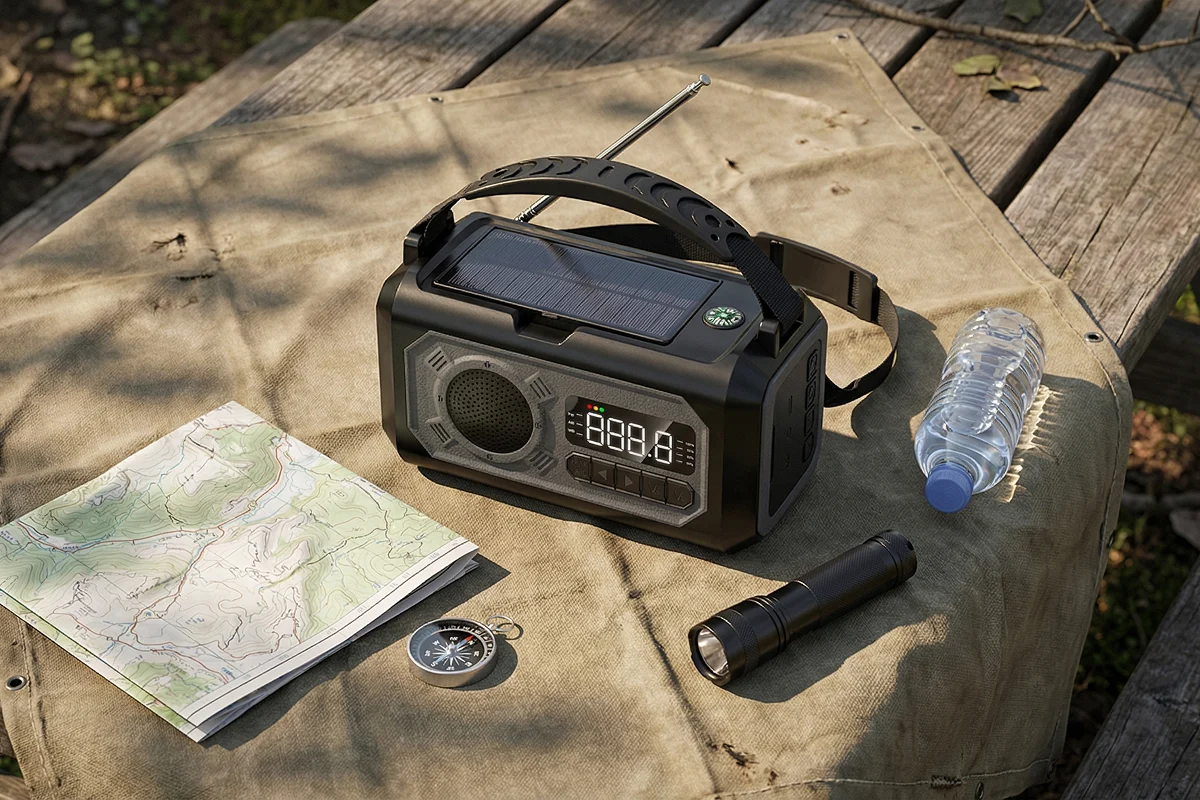
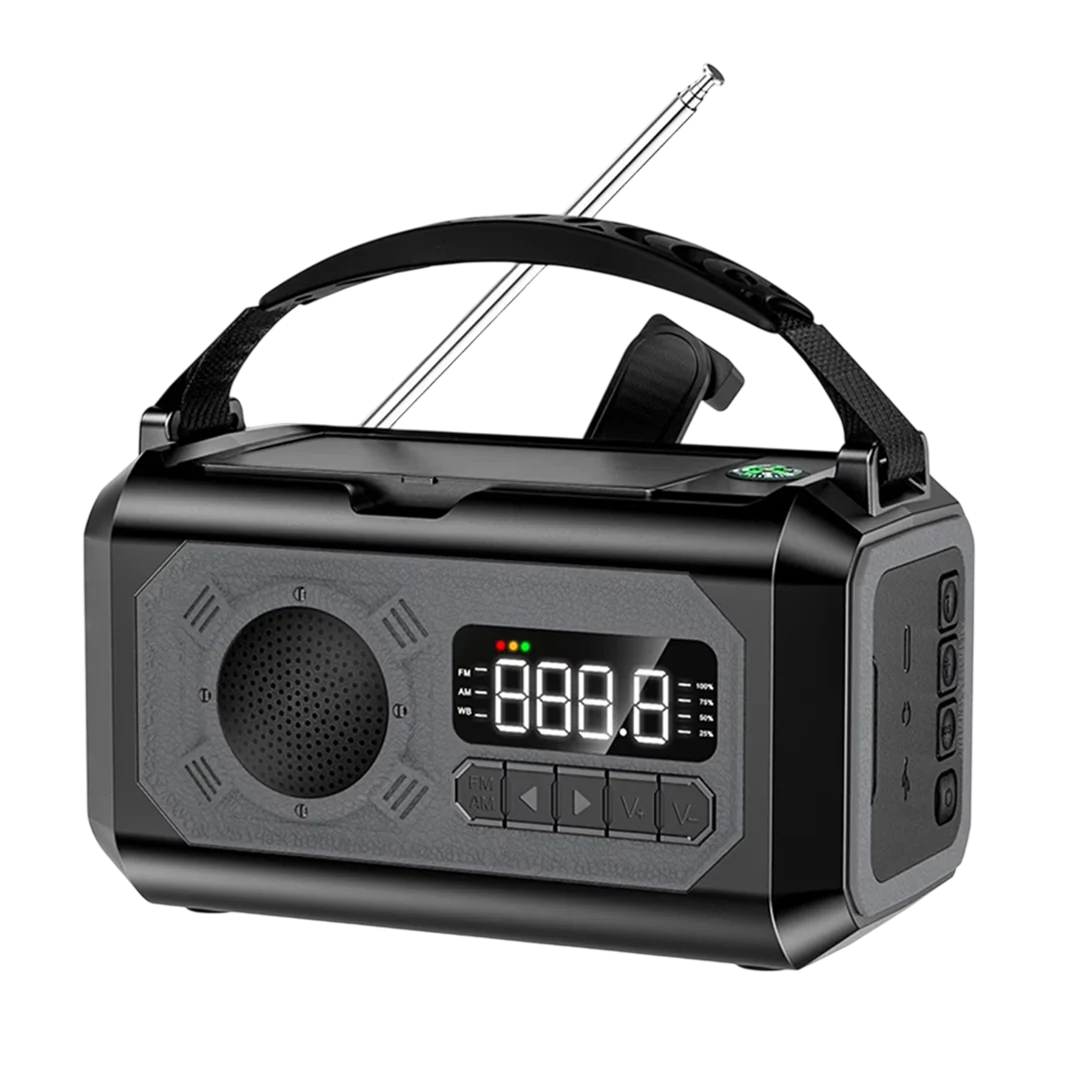
The EmexRadi v1 Emergency Radio has secured the top position in its category for 2026 — and the distance separating it from every competing product is a direct reflection of how differently EmexRadi approached the design challenge. While most emergency radios accept compromises on battery capacity and charging redundancy to hit lower price targets, the EmexRadi v1 was built around a single uncompromising standard — delivering reliable, sustained performance precisely when disaster conditions are at their worst and every hour of uninterrupted reception matters most.
Trusted by over 25,000 households and rated an outstanding 4.9/5 by more than 3,400 verified purchasers, this device has built its reputation not through promotional claims, but through proven performance during real extended blackouts, severe weather emergencies, and genuine off-grid scenarios where failure is simply not an acceptable outcome.
The power foundation of the EmexRadi v1 Emergency Radio is its extraordinary 12,000mAh battery, engineered to deliver up to 108 hours of continuous operation — a capacity that outpaces the typical competing emergency radio by roughly three times. In practical terms, this translates to days of uninterrupted emergency alert reception and weather monitoring during prolonged disaster-driven power cuts, with sufficient reserve energy remaining to simultaneously keep smartphones and other critical devices charged throughout.
For households with serious disaster preparedness plans or outdoor adventurers operating in remote areas far from reliable power infrastructure, this level of sustained energy independence fundamentally changes the reliability equation for a portable emergency radio. 🔋
Where the EmexRadi v1 most convincingly outperforms every rival is through its quadruple recharging system — the most thorough approach to power resilience currently available in any emergency radio on the market. Dual wide-angle solar panels capture available sunlight at nearly double the efficiency of single-panel alternatives, working in tandem with a heavy-duty hand crank dynamo, USB input, and direct charging to deliver four completely independent routes to restoring power whatever conditions surround you. Field testing conducted during extended overcast periods confirmed the dual panels continued generating a meaningful charge in circumstances where single-panel competitors had effectively ceased contributing. When a disaster has taken down the grid for an indefinite period, four independent charging pathways are the difference between a device that stays operational and one that eventually goes dark.